700ml vs 750ml Spirit Bottles: What Export Buyers Should Confirm Before Ordering
700ml vs 750ml spiri
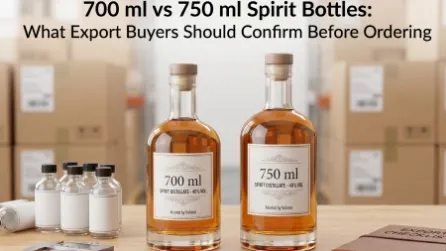
700ml vs 750ml spirit bottles: For international distillery brands and global distributors, selecting the appropriate container capacity is a critical logistical and legal decision. Navigating the nuances between 700 ml vs 750 ml spirit bottles is one of the first things what export buyers should confirm before ordering. A mismatch between the bottle volume and the destination market's compliance laws can lead to catastrophic customs delays, heavy fines, or rejected shipments.
The Legal Divide: Regional Standards
Historically, the global spirits market has been strictly divided by regional volume mandates.
- The United Kingdom and European Union: The standard legal fill for spirits has long been fixed at 700ml.
- The United States: Historically, the Alcohol and Tobacco Tax and Trade Bureau (TTB) mandated 750ml as the standard size for imported and domestic distilled spirits.
However, recent regulatory updates have shifted this landscape. In late 2020, the US TTB amended its regulations to allow the import of 700ml bottles, opening up unprecedented flexibility for craft distilleries. Despite this deregulation, consumer habits and shelf-space configurations in the US still heavily favour the traditional 750ml format, making market-specific research essential.
Glass Material and Weight Considerations
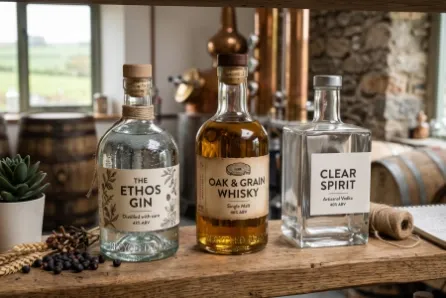
When sourcing from a premium manufacturer like VetroPuro, export buyers must look beyond the liquid volume and examine the physical dimensions of the glass. High-end spirit brands typically opt for Super Flint glass due to its diamond-like brilliance and maximum transparency.
Because Super Flint glass allows for intricate base designs, a 700ml bottle with a heavy, thick base can often share the exact external height and shelf presence of a standard 750ml bottle. This dimensional alignment allows brands to maintain a uniform luxury aesthetic across multiple international markets while adapting the internal capacity to regional laws.
Logistics, Mould Costs, and Tooling
Before signing off on a bulk purchase, export buyers must clarify if the factory will use standard stock tooling or require a custom mould. Commissioning a bespoke, embossed bottle shape involves upfront mould development costs, typically ranging from $3,000 to $15,000.
Furthermore, because glass furnaces operate continuously, custom production runs demand high Minimum Order Quantities (MOQs)—often between 10,000 and 20,000 units. Buyers must calculate how these volumes align with their shipping arrangements, ensuring that pallet configurations and container utilization are fully optimized for either 700ml or 750ml dimensions to prevent costly transit damage.
Technical Checklist for Export Buyers
To guarantee a seamless procurement process, international buyers must establish absolute technical clarity prior to mass production. This includes conducting a rigorous “Project Check” where bottle blueprints are converted into 3D CAD models. This step verifies that the selected neck finish—whether designed for corks, screw caps, or custom aluminium closures—is perfectly compatible with high-speed automated bottling lines and maintains an airtight seal during prolonged sea freight.