
Lead Times for Mass Glass Production
Lead Times for Mass
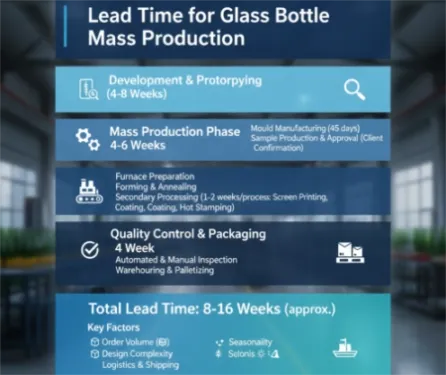
Lead Times for Mass Glass Production – In the global packaging industry, understanding the distinction between stock inventory and bespoke manufacturing is vital for effective supply chain management. While off-the-shelf solutions offer speed, custom-designed vessels require a more protracted timeline to ensure engineering precision.
Comparison of Production Timelines
The lead times for glass bottles is primarily dictated by the complexity of the tooling and the status of the factory's current inventory.
- Stock Inventory: For standard designs already in production, lead times are minimal. These items are typically ready for dispatch within 5 to 10 days, making them ideal for rapid market entry.
- Mass Production (Bespoke): Once a custom sample is approved, the actual factory run generally requires 30 to 45 days, though this can extend to 60 days for exceptionally large volumes or complex orders.
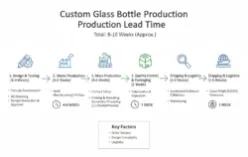
The Custom Project Lifecycle
Developing a unique bottle shape is a multi-stage process. From the initial conceptual brief to the first delivery, a brand should allocate 12 to 14 weeks (approximately 3 to 5 months).
| Phase | Estimated Duration | Output |
|---|---|---|
| Mould Development | 15–25 Days | High-precision metal tooling |
| Sampling & Approval | 2–3 Weeks | Physical prototypes for testing |
| Mass Production Run | 30–45 Days | The finished bulk order |
| Post-Processing | 7–14 Days | Frosting, printing, or spraying |
Critical Factors Influencing Schedules
Several variables can expedite or delay the arrival of your packaging:
- Mould Complexity: Intricate embossing or asymmetrical geometries require more sophisticated CNC machining and longer calibration periods during the “gob” forming stage.
- Decoration and Finishing: Secondary processes—such as acid frosting, screen printing, or electroplating—add sequential steps to the production line, typically increasing the timeline by one to two weeks.
- Factory Capacity: Seasonal spikes in demand (particularly for the festive market) can lead to furnace backlogs. Planning for these peaks is essential to avoid delays.
- Logistics: The total time to delivery must also account for international freight. Depending on the destination and shipping method, this adds an additional 4 to 6 weeks to the overall project duration.
Conclusion
For a successful product launch, businesses should initiate custom inquiries at least six months in advance. This buffer allows for design iterations and logistical transit without compromising the launch date. Choosing a supplier that aligns with your specific volume and timeline requirements is the key to a seamless procurement experience.