
Secure Packaging for Glass Bottles Shipments
Secure Packaging for
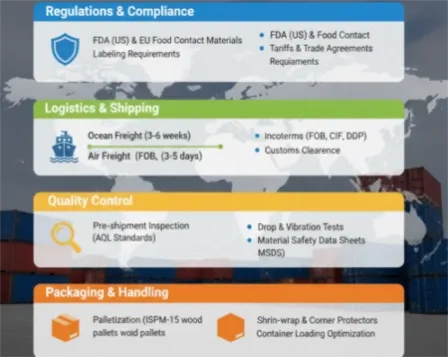
Secure Packaging for Glass Bottles —— Shipping glass bottles internationally requires a meticulous, multi-layered strategy to withstand the rigours of maritime and air transit. To prevent breakage, manufacturers and logistics providers employ a combination of individual protection, structural separation, and external reinforcement.
Internal Protection and Cushioning
The primary goal of glass packaging is to eliminate movement and “glass-on-glass” contact.
- Individual Wrapping: Each bottle is encased in bubble wrap, foam sleeves, or thick Kraft paper. For high-value or fragile items, the “box-in-a-box” method—placing a cushioned primary box inside a larger, padded container—is often used for maximum shock absorption.
- Dividers and Inserts: Corrugated cardboard dividers or moulded pulp inserts are essential. These “cells” keep bottles stationary and prevent collisions during rough handling.
- Void Filling: Any remaining gaps are packed with air pillows or biodegradable peanuts to ensure the contents remain completely immobile.
External Reinforcement and Sealing
Once the interior is secured, the external packaging must be robust enough to support heavy stacking.
- Heavy-Duty Cartons: Only double or triple-walled corrugated cardboard boxes are suitable for international freight. These provide the necessary vertical strength to resist crushing in shipping containers.
- Sealing: High-strength, water-activated, or reinforced tape is applied to all seams. If the bottles contain liquid, they are often placed in sealed plastic bags with absorbent liners to prevent leaks from damaging adjacent cargo.
Labelling and Palletisation
For bulk shipments, cartons are stacked onto plywood pallets and secured with industrial stretch film and plastic strapping. Clear, international handling symbols—such as “Fragile,” “Handle with Care,” and “This Side Up”—are mandatory to guide handlers throughout the supply chain.
| Protection Layer | Material Used | Primary Function |
|---|---|---|
| Primary | Bubble wrap / Foam | Direct impact cushioning |
| Secondary | Corrugated dividers | Prevents bottle-to-bottle contact |
| Tertiary | Double-wall carton | Structural integrity for stacking |
| Logistics | Stretch wrap / Strapping | Secures load for sea/air freight |
Conclusion
By integrating shock-absorbent materials with rigid external structures, manufacturers ensure that glass products arrive at their destination in pristine condition. This disciplined approach to packaging is essential for maintaining brand integrity and reducing the high cost of transit damage.