Selecting Glass for Premium Mineral Water
For the premium mine
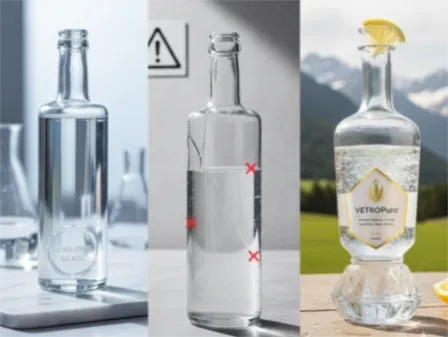
For the premium mineral water sector, selecting the appropriate glass is a critical decision that influences brand perception, product purity, and logistical efficiency. While various glass types exist, borosilicate glass is widely regarded as the pinnacle of quality, though soda-lime glass remains a viable, cost-effective alternative for high-volume operations.
Borosilicate Glass: The Premium Standard
Borosilicate glass is the preferred choice for high-end, often reusable, mineral water bottles. Its reputation is built upon several key performance advantages:
- Absolute Purity: Being chemically inert, borosilicate does not leach minerals or chemicals into the water, nor does it absorb lingering odours. This ensures the water's original taste profile remains uncompromised.
- Thermal and Physical Resilience: It possesses exceptional resistance to thermal shock, meaning it can transition from a refrigerator to a hot cleaning cycle without cracking. This durability makes it ideal for bottles intended for long-term use.
- High-Definition Clarity: Its superior transparency provides a crystal-clear aesthetic that enhances the visual purity of the water—a vital element for luxury branding.
- Logistical Efficiency: Due to its inherent strength, borosilicate bottles can be manufactured with thinner walls. This results in a lighter product, which can significantly reduce carbon footprints and transport costs compared to standard glass.
Soda-Lime Glass: The Commercial Alternative
Soda-lime glass is the most ubiquitous form of glass, utilised for the vast majority of single-use commercial containers.
- Economic Viability: It is substantially cheaper to manufacture than borosilicate, making it the practical choice for high-volume, single-use bottling where price points are a primary consideration.
- Design Flexibility: Soda-lime is easier to manipulate during the forming process. This allows brands to experiment with unconventional shapes—such as square or tapered carafes—that may be technically challenging to achieve with borosilicate.
- Chemical Adequacy: For non-carbonated mineral waters stored in stable environments, high-quality soda-lime glass provides sufficient chemical stability and safety.
Comparison of Glass Types
| Feature | Borosilicate Glass | Soda-Lime Glass |
|---|---|---|
| Durability | High (Thermal & Impact) | Moderate |
| Clarity | Crystal-clear | High (varies by grade) |
| Sustainability | Ideal for multi-use | Often single-use / Recyclable |
| Cost | Premium | Economical |
Conclusion
The choice ultimately depends on the brand's market positioning. If the goal is to provide a “premium” experience centred on absolute purity, durability, and a lightweight feel, borosilicate glass is the superior investment. Conversely, for brands focused on high-volume distribution and complex bottle geometries, soda-lime glass remains a dependable and versatile solution.