Buying Guides
Custom Drawer Gift Boxes: Check the Opening
Review custom drawer gift boxes through opening, bottle reveal, removal and return. Use a six-view storyboard to make sample feedback specific.
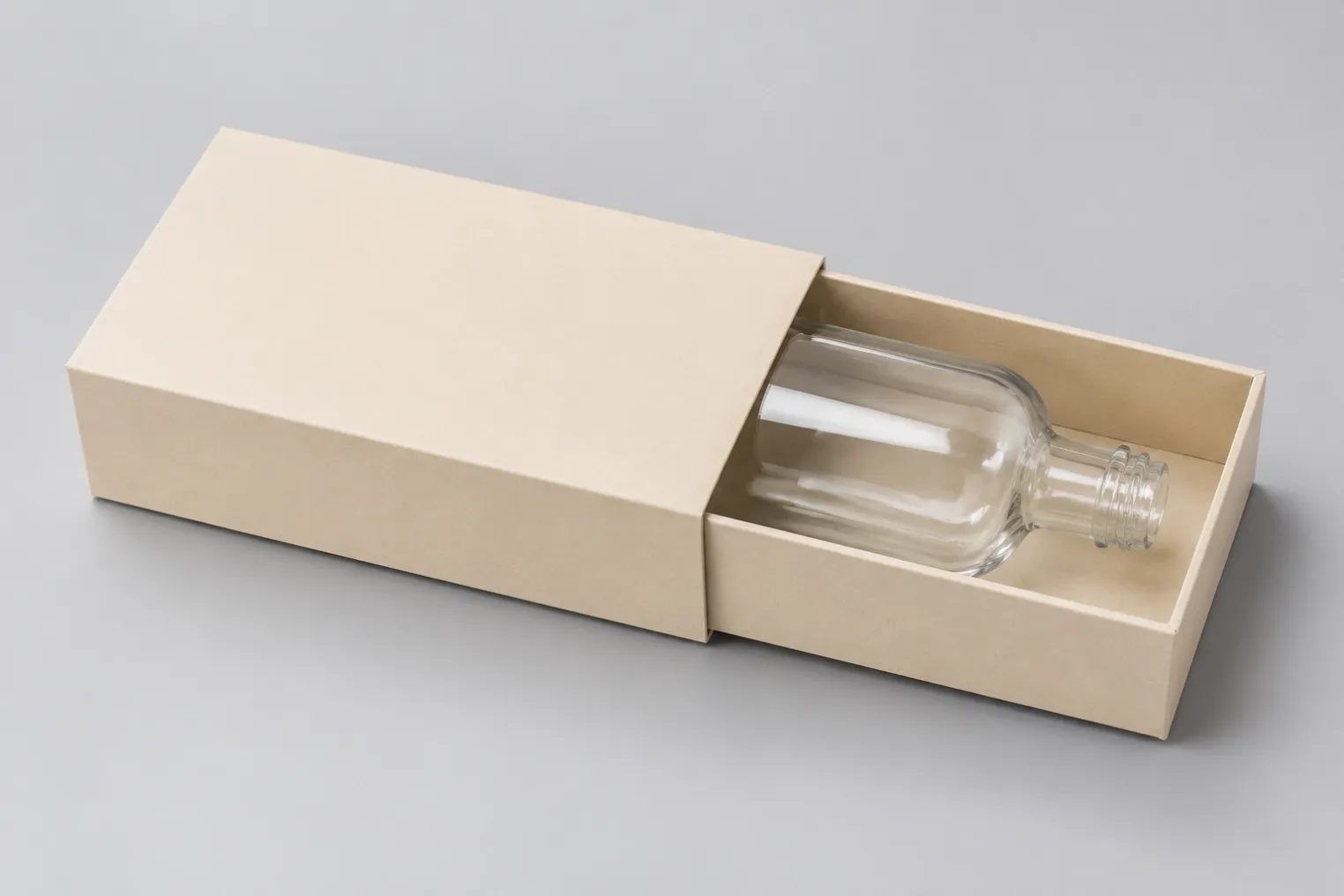
Review the opening before approving the appearance
To review custom drawer gift boxes for a glass bottle, walk through the complete opening sequence: identify the front, support the sleeve, slide the drawer, view the bottle, lift it out and return it. Photograph each stage with the proposed bottle and closure. Record the changes needed at each moment before treating the presentation as accepted.
Imagine a buyer reviewing a spirits gift box on a meeting-room table. Closed, the artwork reads correctly. When the drawer opens, the bottle label faces away from the recipient. Turning the bottle fixes that view but makes it awkward to lift. This hypothetical example shows why a closed-box photograph leaves an important decision unresolved: how the recipient will actually use the pack.
Give the review one observable outcome
Aim to produce an opening storyboard, rather than another list of attractive finishes. Your storyboard should show the intended hand positions, drawer direction, bottle orientation and removal path. Beside each image, record what works, what needs changing and which question remains open. These are buyer review notes, not a claim that the design has passed technical or transport testing.
Keep the physical sample and intended contents identifiable. State which bottle, closure and proposed box arrangement you used. If the sample contains a substitute bottle or unfinished artwork, mark that limitation. A review of one combination should not be treated as acceptance of a different bottle or a revised drawer.
1. Establish the front and opening direction
Place the closed sample as you expect someone to encounter it: on a retail shelf, a counter or a table. Ask a colleague who has not seen the design to identify the front and indicate how they would open it. Watch before explaining. A rotated logo, ambiguous opening edge or competing artwork can send them towards a different starting position.
Record the intended direction in plain terms tied to the artwork, such as “drawer moves to the right when the front logo is upright.” Avoid “opens this way” without a reference view. Check the starting position against any outer sleeve or wrapping planned for the finished presentation; review those components separately if they are not yet available.
2. Follow the hands and drawer travel
Use the sample on the intended type of surface and observe where the reviewer supports the sleeve and where they grasp the drawer. Note whether they have a clear place for each hand, whether the sleeve moves unexpectedly and whether the drawer has enough working space. Ask them to describe any point where they have to change grip.
Move through the opening slowly enough to see intermediate positions. Do not judge only the closed and fully open views. Decide the presentation position you want to review, then photograph it from the recipient’s side. If your concept requires a particular travel limit or retention feature, ask the supplier to confirm the proposed construction; do not infer one from a rendering.
3. Check what the recipient sees first
At the intended presentation position, review the bottle label, closure and any accompanying item together. Is the principal brand face visible? Does an edge cover information your team wants to show? If the bottle lies horizontally, assess the artwork in that orientation instead of relying on a standing-bottle image.
Distinguish an artwork problem from a positioning problem. Rotating the label artwork, rotating the bottle and changing its position within the drawer are different proposals. Ask for the affected opening and removal views again after a change. A correction that improves the first reveal still needs to work when the bottle is lifted.
4. Trace the bottle’s exit and return
Observe the reviewer taking the bottle out with its intended closure fitted. Record where fingers enter, what they grasp and whether the bottle clears the sleeve and surrounding surfaces along the chosen path. Identify contact with decorated areas as something to review, rather than assuming a neat-looking cavity proves an acceptable fit.
Use an appropriate representative sample and an agreed handling method. Ask the responsible supplier or technical reviewer how to assess the proposed contents and support arrangement. Do not open a filled bottle, improvise forceful handling or interpret this presentation exercise as a safety test.
Return the bottle and close the drawer. Can the reviewer restore the agreed label orientation without guessing? Does any proposed card or accessory have an obvious position? Record the closing sequence as well as removal. If your recipient is not expected to repack the product, state that intended use rather than adding an unsupported reuse claim.
Turn the review into a short opening storyboard
Use six labelled photographs as an editorial review format: closed front, initial grip, partially open drawer, intended reveal, bottle removal and returned contents. Keep the camera viewpoint consistent where possible. Add a brief observation to each frame, such as “label faces away at reveal” or “finger access remains to be reviewed.” These examples describe observations, not universal acceptance criteria.
Assign each requested change to the relevant view. After a revision, compare that view and the next affected action: an opening-direction change affects the reveal; repositioning the bottle affects removal and return. Ask the buyer-side design and packaging owners to distinguish appearance acceptance from unresolved construction questions. Request further technical review wherever the sample does not answer the question.
Keep materials and colour decisions specific
VetroPuro offers gift-box customization in coated art paper, corrugated paperboard and other paper-based materials, with drawer-style, cylindrical/tube and lid-and-base formats among the options to discuss. Those choices do not all describe the same construction. Ask which material is proposed for each part of your selected design, and which sample represents the intended finish.
Colours are specified and confirmed using agreed Pantone colour codes. Record the code alongside the surface and artwork element it applies to. Review the physical appearance of the proposed box as well; a code identifies the colour reference, while your sample discussion should make clear which material and finish you are viewing. Do not approve a different construction solely because its screen colour looks similar.
Frequently asked questions
Can a closed-box image be enough to approve a drawer gift box?
It can support a discussion about the closed appearance. It cannot show the full drawer movement, bottle reveal or removal path. Request the views and representative sample needed for those decisions, and identify any part of the design that remains provisional.
Should the bottle label face upward inside a drawer box?
Choose the orientation for your intended presentation instead of assuming one rule fits every pack. Review the recipient’s first view and the bottle’s removal path together. If those requirements conflict, ask for a revised arrangement and repeat the affected opening stages.
Does a good opening sequence establish shipping protection?
No. This exercise reviews presentation and handling observations. Distribution protection requires a separate review of the complete packed product, intended route and applicable test requirements with the responsible parties. A smooth opening or snug appearance is not transport-performance evidence.
What if the bottle or closure changes after the sample review?
Identify the changed component and revisit the affected stages with the revised combination. Recheck the reveal, access and removal path where relevant. Keep unresolved questions visible rather than carrying acceptance of the earlier sample over to the new pack.
Discuss the drawer presentation with VetroPuro
Use the Gift Box collection to identify a presentation direction and the Spirits Glass Bottles collection to explain the bottle profile you have in mind. For an enquiry through Contact Us, share your preferred drawer direction, bottle reference, opening storyboard and the issues you want to discuss. Include your material and Pantone references where already selected.
Ask which proposed sample and construction can address the open questions for your project. Dimensions, materials, quantities, commercial terms and any testing requirements need project-specific confirmation. The useful next step is a clearly described presentation to review, with its limits and remaining decisions made explicit.