Buying Guides
Mineral Water Glass Bottles: 4 Buyer Checks
Choose mineral water glass bottle designs for hotel and restaurant service by checking clarity, shape, closures and decoration against a practical buyer brief.
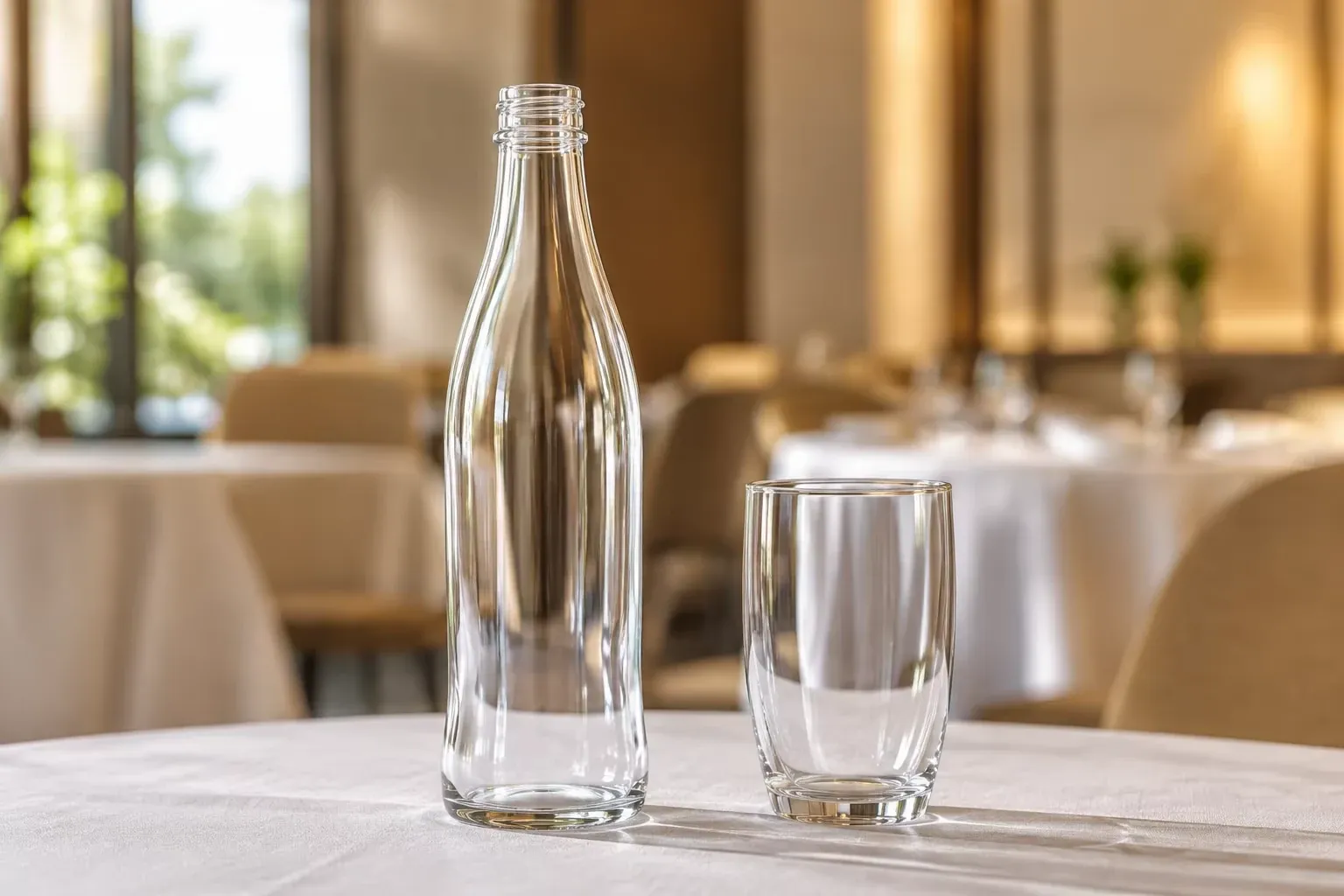
Start with the service setting, then shortlist the design
For custom mineral water glass bottles in hotels and restaurants, compare four things before choosing a design: visual clarity, shape in service, the bottle-and-closure system, and decoration. Start with your intended water type, serving format and handling routine; then use physical samples and supplier documentation to check the shortlist. Use the results to prepare a focused buyer brief and identify the questions that need technical confirmation.
Picture a restaurant table with stemware, plates and a water bottle competing for space. Your designers prefer a tall silhouette; your service team cares about carrying and pouring. Define that service moment before asking both teams to approve a sample.
Why a good-looking bottle can leave the purchase unresolved
A hotel purchasing manager may be comparing bottles for several outlets: a breakfast room, a fine-dining restaurant and a banquet service. A design selected from a single studio image leaves questions about each setting unanswered. The missing information is not another description of elegance. It is a record of how the proposed pack fits the actual tables, storage areas and service routine.
Without that record, your team may revisit artwork after a sample arrives, reconsider the serving format or request another closure discussion. A useful shortlist records both the preferred appearance and the unresolved checks, giving purchasing, operations and the bottling partner a clear next decision.
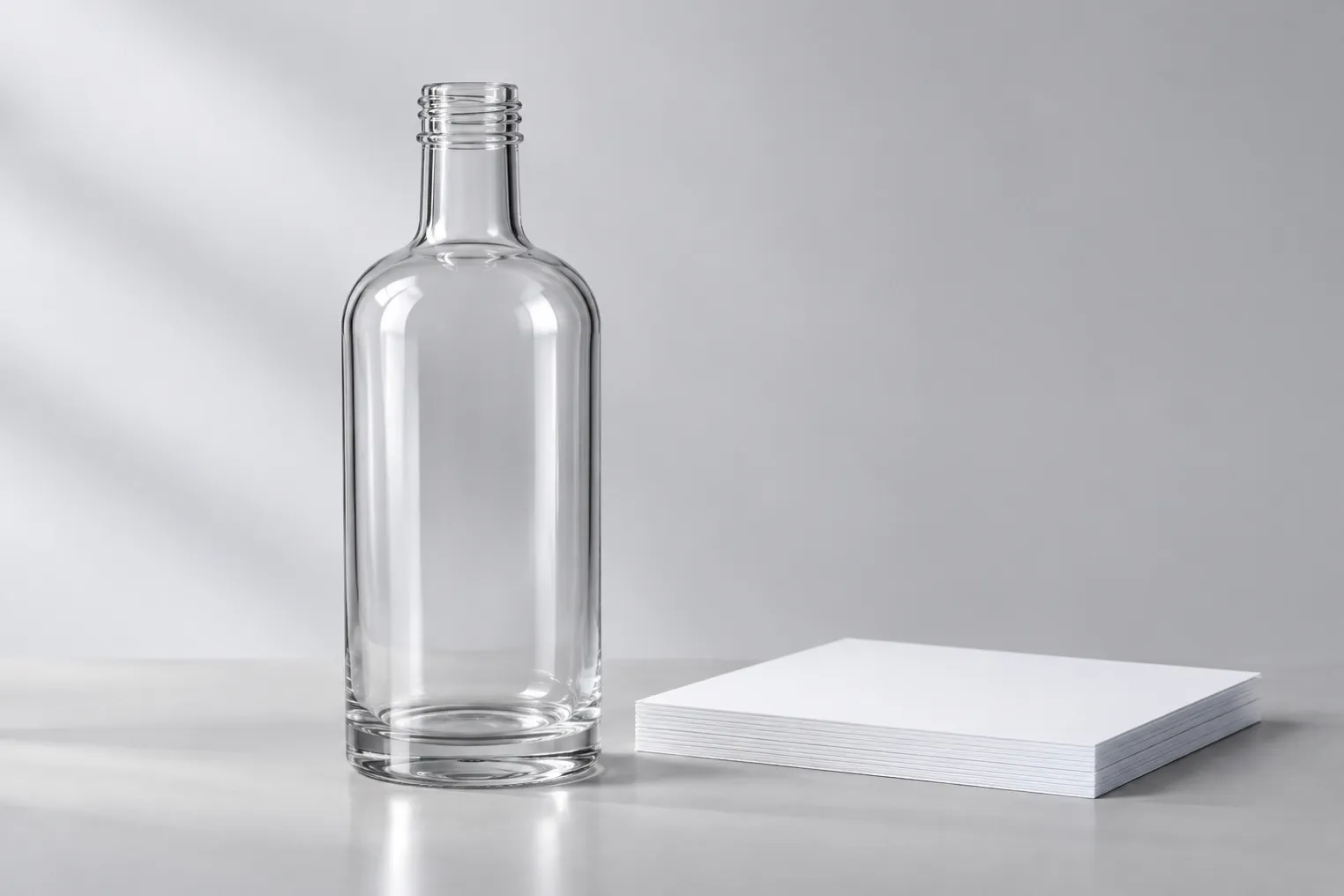
A photograph is a reference, not a specification
A studio photograph answers an appearance question. Your purchasing decision also needs dimensions, a closure specification and evidence for the intended use. Separate what you like about the image from what needs a drawing, physical sample or technical assessment. That distinction lets your team explore the visual direction while identifying the information needed for approval.
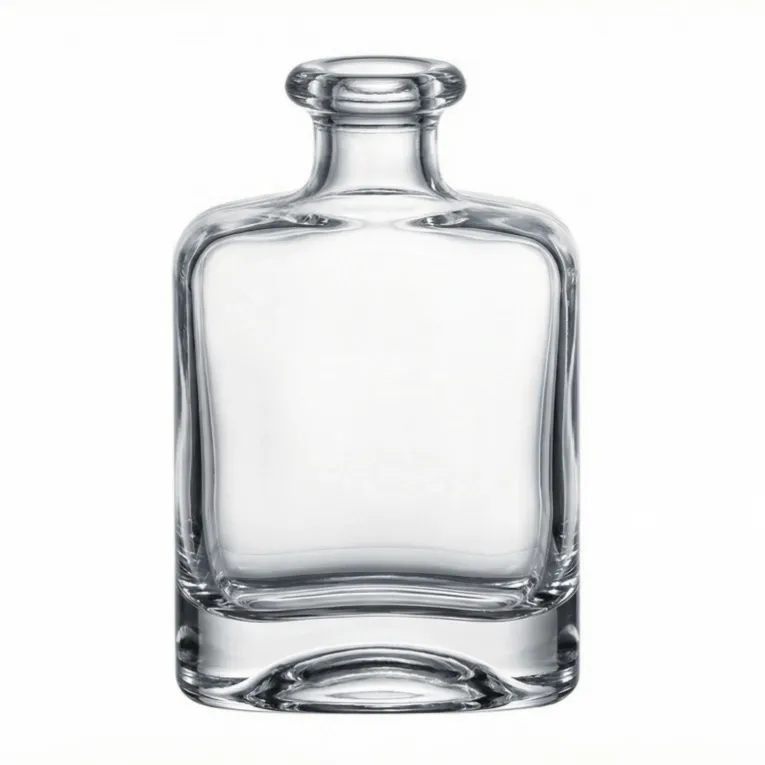
VetroPuro’s Mineral Water Glass Bottle collection provides a gallery of design references. Use it to explain your preferred silhouette and presentation, then request the specifications for the proposed bottle. The gallery introduces the design direction; dimensions, capacity and project availability need separate confirmation.
Four checks for hospitality bottle selection
1. Compare clarity in your intended presentation
Review an undecorated sample and a proposed finished sample under the lighting relevant to your venue. If chilled service is intended, include that condition in the evaluation plan. Look at the filled bottle against the table setting and read the label from a seated position. Record what your team accepts rather than relying on the word “premium.”
Ask the supplier to identify the proposed glass and provide the relevant documentation for your intended market and use. Record visual approval and technical acceptance separately: one concerns the presentation your team prefers, while the other concerns the documented requirements for the pack.
2. Check the shape through the service sequence
Use a sample to walk through receiving, storage, carrying, opening, pouring and table placement. Check its height and footprint against your actual refrigerator shelves, trays and table layout. Assess handling with the intended fill and closure so you are reviewing the complete serving pack.
A distinctive shoulder or narrow body may appeal to your designers. Check how it works when a server lifts the bottle, reads the label and pours beside occupied place settings. Note any awkward grip, label obstruction or placement issue. Use those observations to explain the adjustment you need.
3. Confirm the bottle and closure as a system
State clearly whether the project concerns still water, sparkling water or separate versions of both. Ask the bottling partner and supplier to confirm the proposed neck finish, closure, filling conditions and relevant validation requirements together. Similar appearance does not establish interchangeability. In particular, never infer sparkling-water pressure suitability from a bottle shape, wall appearance or cap style.
If repeat filling is planned, specify the proposed washing and reuse conditions separately. Ask the responsible technical parties to confirm suitability for that system. A bottle intended for one service model should not be assumed suitable for another.
4. Review decoration for recognition and service
Compare the proposed artwork on the actual bottle shape. Check brand-name visibility, label position and whether your team can distinguish still and sparkling versions where both are offered. Consider the bottle from the guest’s seated view and the server’s handling position. Use the review to decide which elements need emphasis and which can remain subtle.
VetroPuro’s decoration page lists options including labelling, screen printing, frosting and embossing. Ask which options can be evaluated for your proposed design and service conditions. Agree the finish and acceptance criteria, then compare decorated samples against the artwork and service brief.
Choose the next check for your service routine
Restaurant table service
Prioritize the intended table setting: placement, guest-facing identity and the opening-and-pouring sequence. If the appearance works but closure details remain unresolved, retain the design on the shortlist and make the bottle-and-closure review the next approval step.
Hotel dining and banquet service
Use the same brief across outlets, then record the conditions that differ. A tray-carrying routine, refrigerator shelf and banquet table may each introduce another constraint to check. If one pack cannot meet all intended routines, discuss separate requirements rather than asking a single sample to represent every use. Record the sample and requirements used for each outlet’s approval.
A brand serving both still and sparkling water
Maintain a separate technical record for each proposed version, even when the branding is shared. Review identification in service alongside the bottle-and-closure evidence. If the water type or filling process has not been decided, finish that brief with the bottling partner before treating a visual shortlist as a production candidate.
Turn the sample discussion into a buyer brief
Prepare a brief that separates preferences, requirements and open questions. The following notes give purchasing, operations, designers and the bottling partner a common basis for discussion.
Service context: name the outlet, serving format and whether the bottle is opened at the table. Describe the intended water type and whether any repeat-use system is proposed.
Pack requirements: record your target capacity, relevant storage and tray dimensions, closure preference and bottling-partner requirements. Mark which inputs are targets and which are requirements confirmed by your bottling partner.
Visual direction: identify collection images you like and explain why. Separate clarity, silhouette, artwork position and decoration preferences so the supplier can address each point without guessing what “luxury” means to your team.
Approval responsibilities: name the buyer-side owners for service evaluation, artwork and technical acceptance. Record the evidence still needed and the next review step. Add destination market, projected volumes and timing as your project inputs; request current project-specific terms rather than assuming an MOQ or lead time.
Frequently asked questions
Does clearer-looking glass prove better bottle quality?
No. An image can communicate a visual direction, but it cannot establish glass composition, compliance or performance. Compare physical samples for appearance and obtain the relevant documentation separately for technical acceptance.
Can the same bottle design serve still and sparkling water?
Do not assume so. Ask the supplier and bottling partner to confirm each proposed bottle-and-closure combination against the intended beverage, filling conditions and validation requirements. Shared styling is not pressure-suitability evidence.
What should a hotel buyer check beyond the bottle shape?
Review the complete serving pack against storage space, trays, table placement, opening, pouring and brand identification. Assign technical acceptance separately so a successful service demonstration is not mistaken for product qualification.
What information helps start a supplier conversation?
Prepare the service setting, target capacity, water type, closure requirements, design references, destination market and projected volume. Include your sample-approval priorities.
Explore the collection with your service brief in mind
The right shortlist connects the bottle you want to the way it will be served. Explore VetroPuro’s Mineral Water Glass Bottle collection, note your preferred designs and bring your service brief to the Contact Us entry to discuss your project.